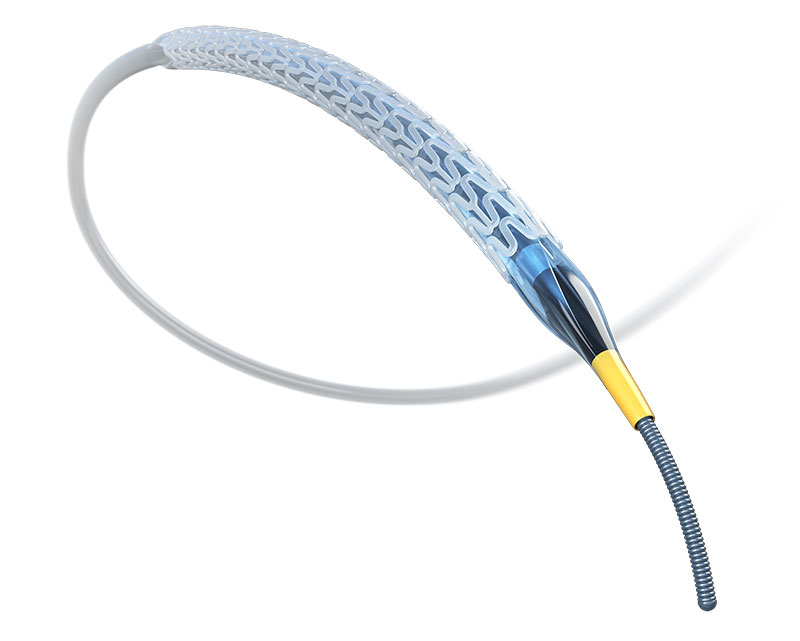
Coronary Scaffold
The Next Generation
Coronary Artery Disease
An accumulation of plaque in arteries supplying blood to the heart causes constriction of blood flow.
The coronary arteries, which supply blood to the heart muscle, are susceptible to the buildup of plaque, which can block or inhibit blood flow, a condition known as coronary artery disease (“CAD”). If the coronary arteries become too narrow, cardiac tissue can become starved of nutrients and oxygen, resulting in severe chest pain known as angina. As artery narrowing becomes more severe, death of cardiac muscle downstream from the blockage can occur due to the lack of oxygen. The sudden death of cardiac muscle can result in a myocardial infarction, commonly known as a heart attack.
Conventional Coronary Stents
Today stents, small, tube-like devices permanently implanted into an artery after angioplasty, are commonly used to treat CAD. They provide patients with minimally invasive and effective treatment, avoiding the need for patients to undergo invasive bypass procedures. All currently approved stents are made of metal and help stabilize diseased coronary arteries by propping them open and restoring blood flow. When a metal stent is placed inside the vessel, it serves as a permanent scaffold. Although rare, placement of a permanent metal stent can result in long-term complications.
ReZolve™ Sirolimus-Eluting Bioresorbable Coronary Scaffold
The ReZolve™ scaffold integrates a proprietary drug-eluting polymer and a novel design to create a temporary device with metal-like performance out of a polymer material. The scaffold restores blood flow and supports the artery through healing, then completely dissolves from the body, leaving the patient free of a permanent implant.
The ReZolve™ Bioresorbable Coronary Scaffold restores, remodels and resorbs
REVA’s Proprietary Polymer Composition
The ReZolve™ scaffold incorporates a proprietary tyrosine-derived polycarbonate polymer, which was developed specifically for bioresorbable scaffold performance and provides adequate strength both initially and over time. Unlike permanent metal alloys, the REVA polymer dissolves from the body after healing of the artery has occurred, leaving additional treatment options available in the future. Another unique feature of the polymer is that it is visible under x-ray, allowing the entire scaffold to be visualized during the implant procedure and at follow up. Other bioresorbable polymer scaffolds are invisible and require permanently attached radiopaque markers to aid in their placement.
Optimal Drug Delivery
ReZolve™ is a drug-eluting scaffold coated with the therapeutic agent Sirolimus that inhibits renarrowing of the artery, referred to as restenosis, which can occur in the area of implantation. The drug that is delivered is a –limus compound, chosen from the family of anti-restenotic pharmaceuticals most preferred by physicians and industry experts. Completely eluted from the polymer within six months, this timed release of the drug may permit a reduction in the need for prescribing long-term blood thinning medications to prevent the formation of clots. With metal stents, these blood-thinning drugs currently are recommended to be used for a minimum of one year, but often are prescribed for the rest of the patient’s life.